Card Counters Store Check: Blackjack and Concentration, Fused Without a Lobby
This is a store-data check of Card Counters, not a hands-on review — every claim below comes from the official Steam listing (AppID 5293020), verified today, and nothing here reflects play time.
The pitch
<figcaption>Official Trailer — Card Counters, Charles Tatum II · Small Screen Software. Source: Steam AppID 5293020 (checked 2026-10-26).</figcaption>
</figure>
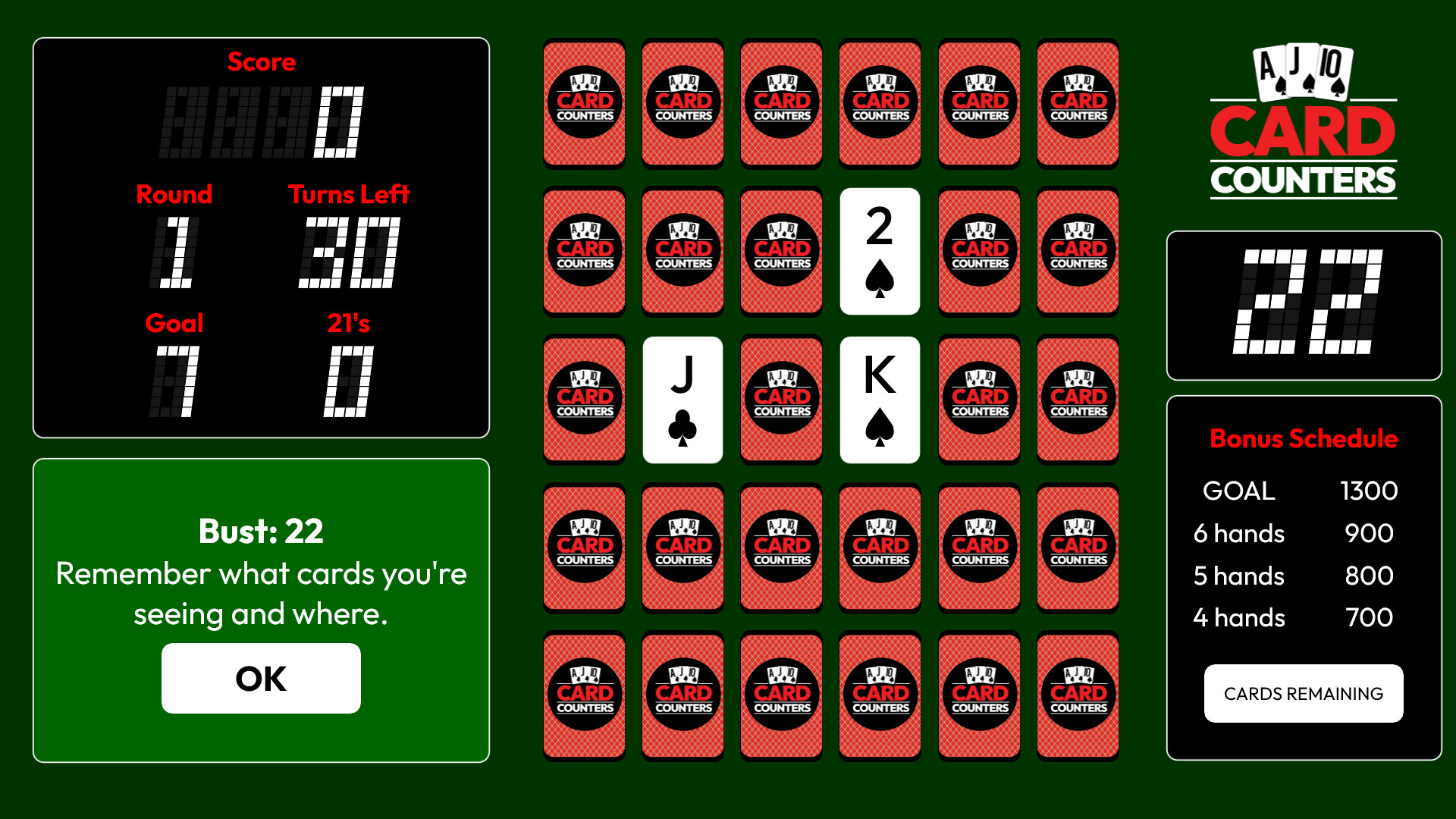
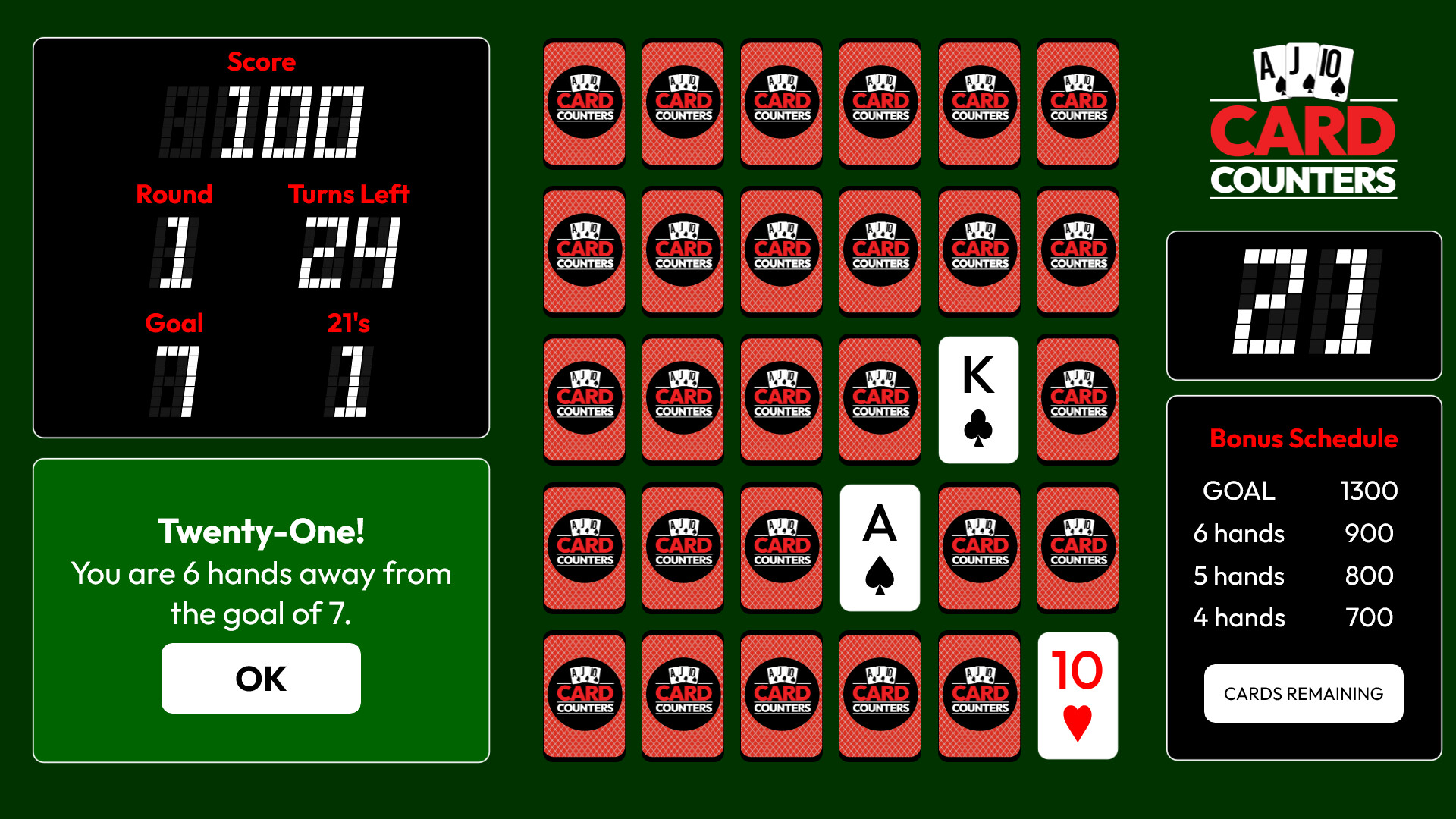
The listing is unusually literal about its ingredients: this is the memory card game Concentration fused with the casino card game Blackjack. The objective, stated plainly, is to find sets of three cards totalling 21 within the allowed turns per round.
That is a precise mechanical sentence, and it distinguishes the game from both parents. Standard Concentration is pure recall. Standard Blackjack is probability and decisions under incomplete information. Combining them means you have to remember card positions and simultaneously reason about which three-card sums reach 21 — a two-layer puzzle rather than a single mechanic relabelled.
It is worth being concrete about why the fusion is not cosmetic. In ordinary Concentration the only hidden information is position, and once a pair is located the round is effectively solved; memory is the entire skill. In Blackjack the cards are face-up but the deck is unknown, so the skill is arithmetic and risk assessment in the moment. Here the two demands stack: the values you are summing are themselves hidden behind positions you must first learn. A player cannot shortcut the arithmetic by seeing the board, and cannot shortcut the memory by computing on the fly. Each flip has to serve both goals at once, which is exactly the kind of constraint that turns a familiar parlour game into something with its own texture.
The turn budget as difficulty
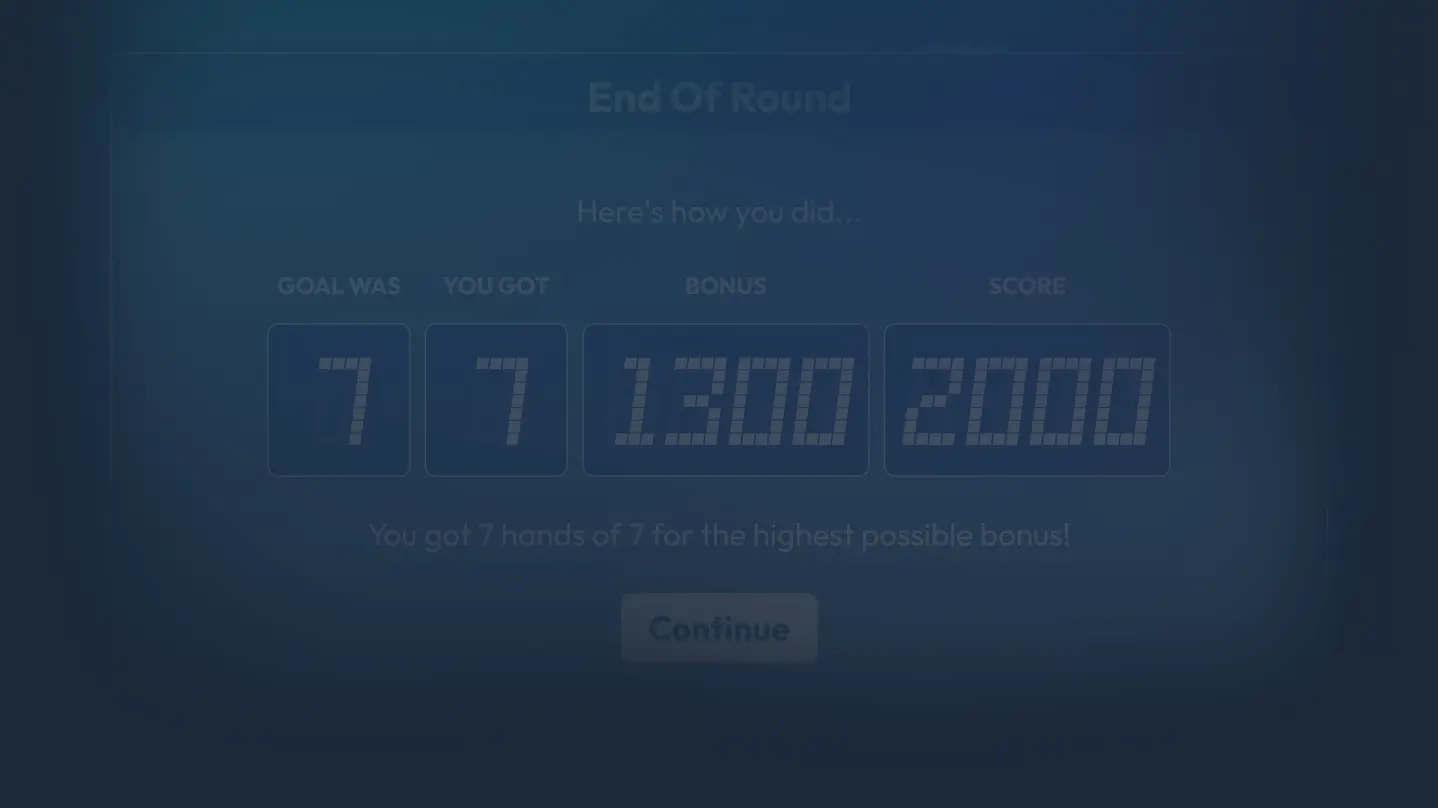
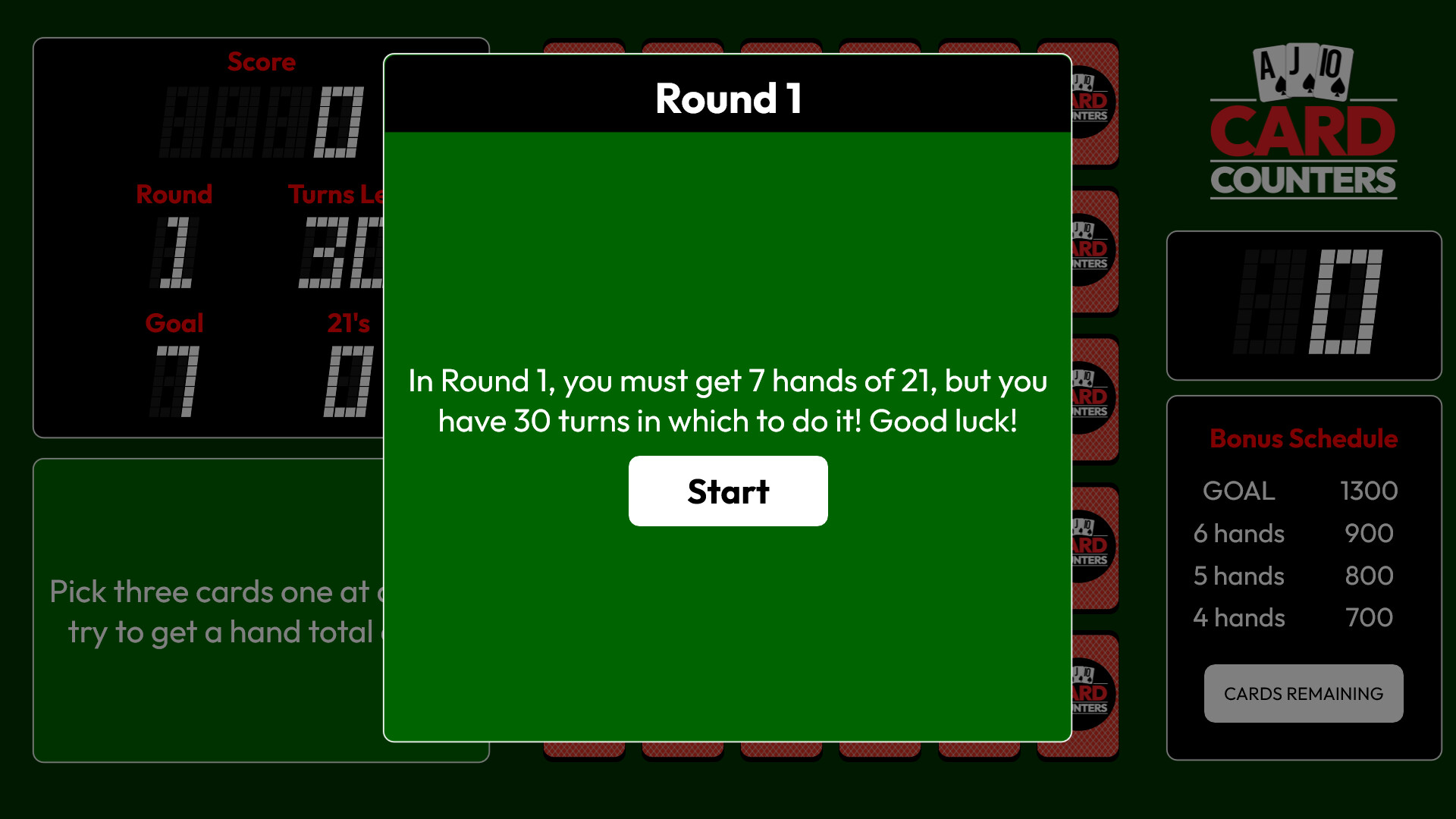
The most load-bearing phrase on the page is "within the number of allotted turns per round." That is the constraint that makes this a game rather than a memory exercise: a turn limit converts recall into planning, because every flip you cannot afford to waste.
How that limit scales is the design question the listing does not answer. A generous turn budget makes the game relaxing; a tight one makes it a genuine puzzle. The store page presents only one number per round and no curve.
This matters more than it might sound. A turn budget is the dial that decides which of the two parent games dominates. Give the player room to spare and the experience drifts toward gentle Concentration with a bit of arithmetic attached — pleasant, low-stakes, forgiving of a bad guess. Tighten it and the arithmetic becomes the pressure point: you are forced to commit flips to cards whose values you have partially mapped, weighing the cost of confirming a number against the cost of leaving a set unfinished. The same ruleset can produce a cozy memory toy or a sharp little optimisation problem depending on a figure the page never states. Buyers cannot know which they are getting until they play, and that uncertainty is itself a fact about the listing rather than a knock on the game.
Store facts, verified
- AppID 5293020, Windows only
- RM11.24 in the Malaysian store view, no Mac or Linux build
- Released October 25, 2026 — one day before this check
- Genre tagged Casual, single tag only
- Developer Charles Tatum II; publisher Small Screen Software
- Ten screenshots on the store page, one trailer
- No public demo listed
What the page does not say
Three things matter and none are on the listing. First, whether rounds are hand-authored or procedurally generated — a memory puzzle's replay value depends entirely on this, and a fixed set of rounds exhausts quickly. Second, whether there is any progression or scoring structure beyond per-round completion. Third, whether the price is fixed or regionally variable, since the store shows RM11.24 rather than USD.
Ten screenshots and one trailer give a good sense of the visual treatment, which is the whole of what a card game at this scale offers on a store page.
The first gap is the one to watch. Hand-authored rounds can be tuned to a fine edge — each board a small designed problem with a known solution and a deliberate turn budget — but there are only ever so many of them, and a memory puzzle loses its charge once the layouts are learned. Procedural generation solves the volume problem and introduces a different one: random boards can be unfair, offering sets that no reasonable turn budget allows you to find, and the difficulty curve becomes a matter of tuning rather than authorship. Neither approach is wrong; they simply promise different things, and the page commits to neither.
The second gap is about motive. Per-round completion is a complete loop for a puzzle game, but it gives the player nothing to carry between sessions — no score to beat, no unlocks, no reason to return once the boards are familiar. Whether that is a limitation or a deliberate small-scope choice depends on what you want from a game at this price.
The third gap is administrative but real for anyone outside the store's default region. A price shown in ringgit rather than dollars tells you the listing is region-aware, but not whether the figure is a fixed conversion or a locally set number. That is a question for the checkout page, not the storefront, and it is the kind of detail a store-data check can flag but not settle.
The price question
RM11.24 is roughly the price of a coffee, and the risk profile matches that framing. This is a small, single-mechanic puzzle game made by an individual developer under a small-screen-styled publisher.
The honest risk is content volume. A fused card puzzle is a good idea that can be exhausted in an evening if the round set is small. At this price that is acceptable — but it is the difference between a recommendation and a shrug.
It is worth separating the two kinds of risk a buyer faces here. The first is quality: whether the mechanic is executed well, whether the turn budgets are tuned, whether the interface makes the two-layer reasoning legible. The trailer and the ten screenshots are the only evidence available, and they are evidence of presentation rather than of feel. The second is quantity: how many rounds exist and whether they hold up on a second pass. Neither risk is expensive to take at this price, but they are different bets, and the listing speaks more clearly to the first than the second.
Verdict
Buy if you want a short, quiet logic game and the Concentration-Blackjack fusion sounds interesting rather than gimmicky. The premise is specific, the mechanic is genuinely two-layered, and the price is trivial. Wait if you need long-form progression; nothing here promises a campaign.
https://store.steampowered.com/app/5293020/