Crazy City Golf Store Check: 8-Player Party Golf and a City Rebuilt Every Round
This is a store-data check of Crazy City Golf, not a hands-on review — every claim below comes from the official Steam listing (AppID 5347600), verified today, and nothing here reflects play time.
The pitch
<figcaption>Official Trailer — Crazy City Golf, Nulpoyo / Era Lab. Source: Steam AppID 5347600 (checked 2026-10-26).</figcaption>
</figure>
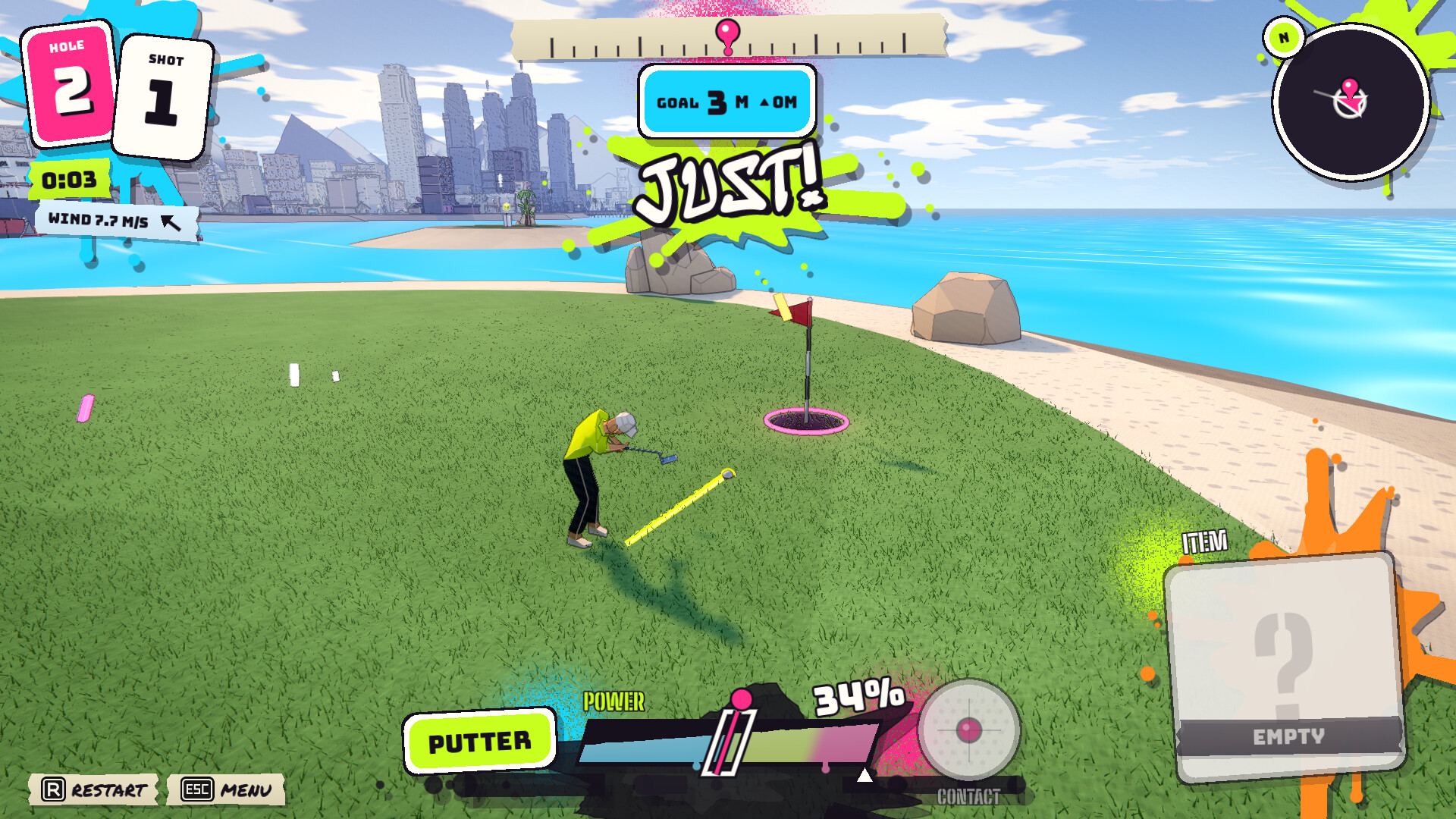
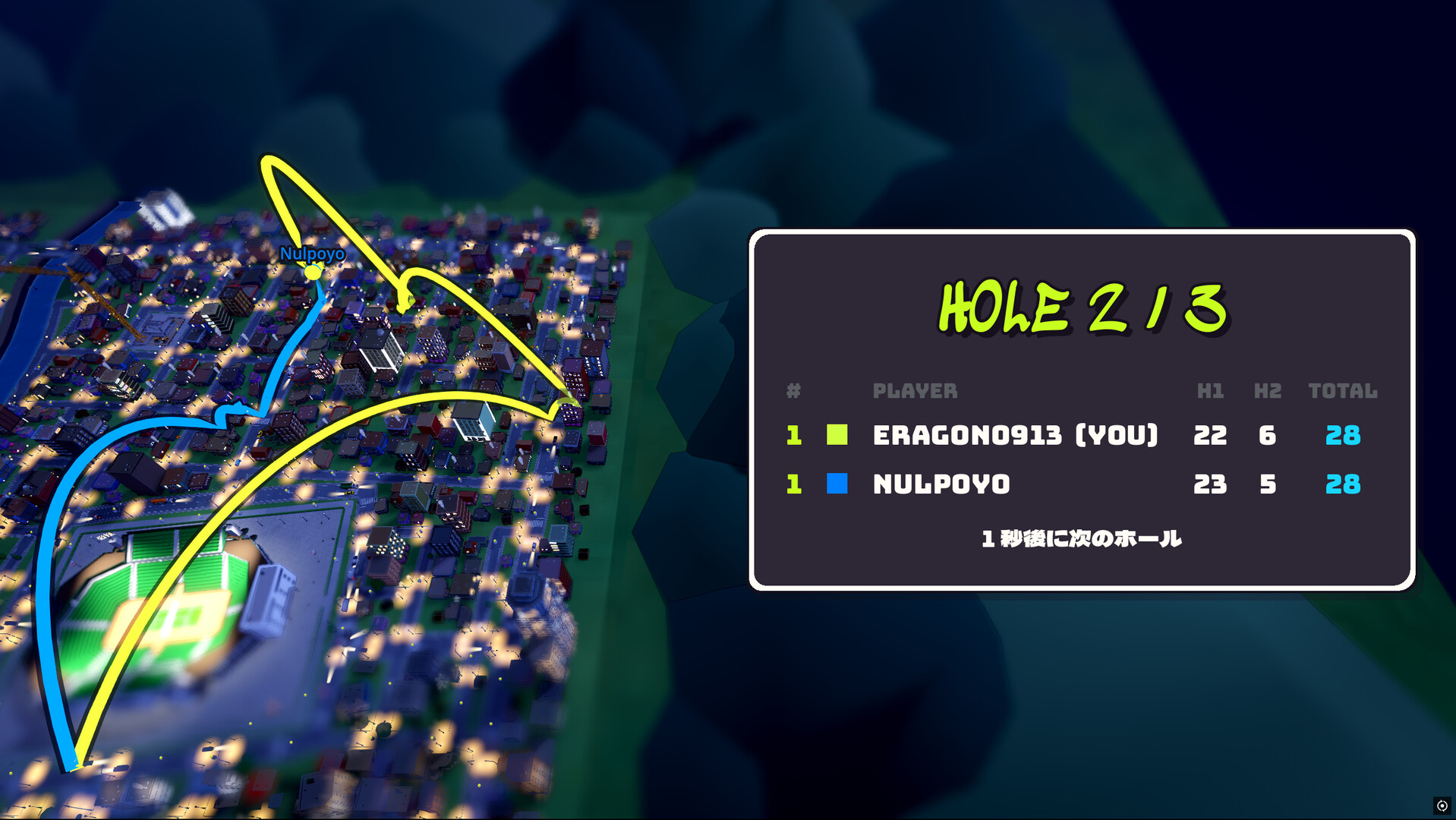
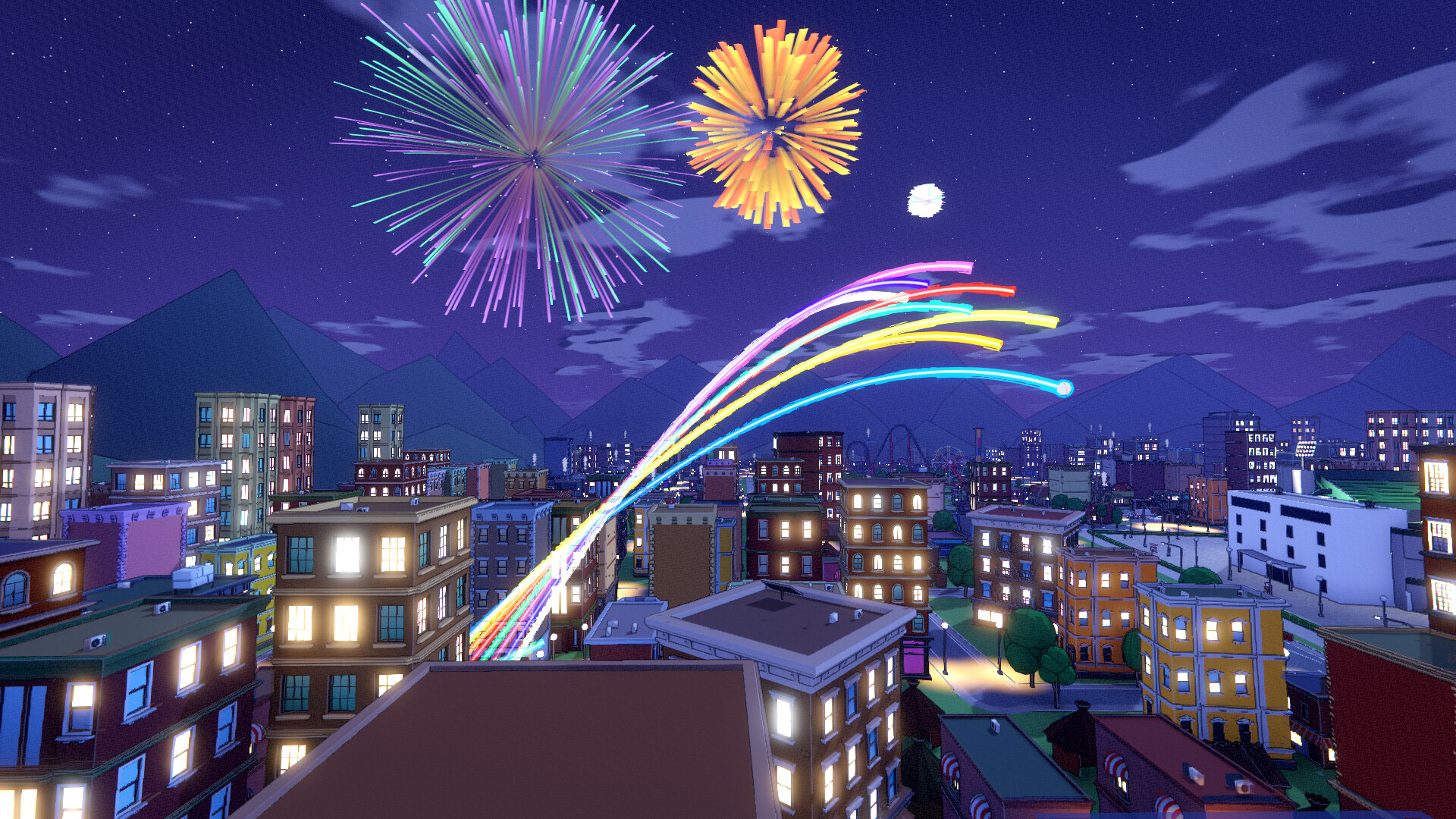
The whole city is the course. The listing promises up to eight players teeing off simultaneously through alleys and over rooftops, with a city layout rebuilt every round so that route-finding never settles into memorization.
Two mechanics carry the differentiation. The first is that everyone plays at once rather than taking turns, which turns golf into a race. The second is the weather-and-disaster layer: summon meteors and tornadoes for shortcuts or to sabotage opponents, and turn accidents into comebacks.
That combination puts the game closer to a party racer than to a golf sim. The listing does not mention realistic physics, handicap systems, or course management — it mentions chaos, shortcuts, and sabotage.
It is worth being precise about what simultaneous play actually changes, because it is more than pacing. Turn-based golf is a game of isolated execution: you line up a shot while everyone else waits, and the social energy comes from reacting to outcomes after the fact. Playing at once removes that waiting entirely and replaces it with interference. Every shot is taken under the possibility that someone else is already mid-flight toward the same rooftop, or is about to drop a meteor on the line you picked. The mechanic converts a precision sport into a game of timing and risk, which is exactly the register a party game wants.
The disaster layer compounds this. Summonable meteors and tornadoes are described as serving two purposes at once — shortcuts for the player who calls them, sabotage against everyone else — and the listing frames accidents as comeback material rather than pure punishment. That framing matters: in a race-style game, a player who falls behind early can be handed a dramatic equalizer instead of being left to grind out a recovery. Whether the implementation is generous or punishing is not something the store page settles, but the intent is legible.
Why the rebuilt city matters
A procedurally rebuilt course is the design decision that determines whether this game has legs. In a fixed-course party golf game, route knowledge converges within a few sessions and the social layer has to carry the rest. Rebuilding the city every round pushes the discovery phase to repeat indefinitely.
The cost of that choice is consistency. Procedural layouts vary in quality, and a golf game depends on routes being readable enough to aim at. The listing claims the city is rebuilt every round but says nothing about how the layouts are constrained.
That silence is the crux of the whole proposition. Procedural generation is not a single technique; it is a spectrum from hand-authored chunks stitched together to fully emergent geometry. A game that assembles curated rooftop segments into a new arrangement each round can keep quality high while still defeating memorization. A game that generates freely risks rounds where the obvious line is blocked, the shortcut is a dead end, or the course simply reads as noise. The listing does not tell us which approach Nulpoyo and Era Lab took, and that single unknown shapes how the game will feel on the twentieth round as much as the first.
There is a second-order effect worth naming. Rebuilding the city also resets the social meta. In fixed-course games, groups develop shared shorthand — the trick shot on hole four, the shortcut everyone knows. Procedural rebuilding means that shorthand has to be rebuilt each round, which keeps conversation alive but also removes the comfort of mastery. For a party game aimed at short, loud sessions, that trade is probably the right one. For anyone hoping to grind a course into submission, it is the wrong one.
Store facts, verified
- AppID 5347600, Windows only
- $8.49, no Mac or Linux build
- Released October 26, 2026 — the same day as this check
- Genres tagged Casual and Sports
- Developers listed as Nulpoyo and Era Lab; publisher Nulpoyo
- Nine screenshots on the store page, one trailer
- No public demo listed
- Online party play advertised for up to 8 players
The Windows-only line deserves a moment. At this price and this genre, a Mac or Linux build is not guaranteed for any small release, and its absence narrows the audience before the game has even launched. Anyone in a mixed-OS friend group should check that everyone can actually install it before committing a lobby.
The Casual and Sports tags are the store's own classification, and they describe the game's ambitions honestly: this is a sports-shaped party game, not a simulation wearing a casual label. The developer-publisher split — Nulpoyo and Era Lab as developers, Nulpoyo as publisher — is a small studio arrangement, which is consistent with the modest media set and the launch-day timing of this check.
What the page does not say
Three things matter and none are on the listing. First, whether there is any solo or bot option — an 8-player party game with no bots lives or dies on whether you can find seven people. Second, whether cross-play or matchmaking exists for players without a group. Third, whether $8.49 is a one-time purchase or the entry price to a game with paid cosmetics.
The trailer is the best available evidence for feel. One trailer and nine screenshots is a modest media set for a launch-day title, and the screenshots show the city-courses in a way that
Two things would settle it fast. Launch-day reviews are the only signal on whether the procedural generation produces readable routes or confusing ones. And the player count at launch will show whether an 8-player party game found an audience without matchmaking.
It is worth separating these unknowns by how much they would change a purchase decision. Bots are the biggest. A group of four who cannot reliably field eight players needs either bots or a game that scales down gracefully; the listing confirms neither. Matchmaking is the second. Without it, the game effectively requires a pre-formed friend group, which is a very different product from one you can drop into alone on a Tuesday night. The monetization question is the smallest in the moment but the most annoying later: a low sticker price is only a bargain if it is the whole price.
The media set is thin enough that it functions as a constraint on what we can say. One trailer and nine screenshots can communicate tone, art direction, and the broad shape of a round, but they cannot demonstrate how a procedurally rebuilt course holds up over time, how the disaster tools are balanced, or how eight simultaneous players actually read on screen. Those are exactly the questions a store check cannot answer, which is why the launch-day signals above carry so much weight.
The price question
$8.49 for an 8-player party game is $68 for a full lobby. That is not trivial, and it frames the risk: the premise is strong, the price is low, but the value depends entirely on whether you can gather eight people at once.
Games like this have a short tail if the group does not return. The rebuilt city helps — it delays the point where the group has memorized everything — but it does not solve the scheduling problem.
That is the honest arithmetic of the genre. The per-copy price is low enough that a single curious buyer can take the gamble without much thought, but the game's actual promise — eight players, simultaneous, chaotic — only pays out when the lobby fills. A group of four gets half the advertised ceiling and, presumably, a different experience than the listing is selling. Whether that is a fine way to play or a compromised one is not stated anywhere on the page.
The scheduling problem is also the reason the procedural city cannot fully rescue the game. Novelty keeps a group coming back only if the group was coming back anyway. What procedural rebuilding does is raise the ceiling on how many sessions feel fresh; it does nothing about the calendar.
Verdict
Buy if you have a group of four or more and want a chaotic party game that does not take itself seriously. The simultaneous-play design and the destructible city give it a real identity compared with turn-based party golf. Wait if you mostly play alone; nothing on the listing promises a satisfying single-player mode.
https://store.steampowered.com/app/5347600/