
Dandelion Void's Demo Is Live—Is This the Survival Sim to Watch Before 2027?
Dandelion Void has released its first public Steam demo after appearing in the fall Triple-i Initiative showcase. Its pitch—a generation ship swallowed by a jungle, systemic survival, and a refuge built from an inherited disaster—is distinct enough to merit attention before a planned 2027 Early Access launch.
This is a store-and-announcement analysis. IndieGame.party did not play the demo, so it does not assess performance or quality. Official Steam URL: https://store.steampowered.com/app/3582810/.
Why this demo is an early signal
The demo converts a cinematic concept into something players can verify. Official materials describe a simulation where the player explores the derelict arkship Pergola, salvages resources, establishes a refuge, and survives the same ecosystem that overwhelmed earlier generations. The Triple-i showcase supplied visibility; the public build supplies evidence.
Steam's app data confirmed demo app 5248460 and a broad 2027 release window at 1:58 p.m. MYT. Kwalee is listed as publisher and Manzanita Interactive as developer. Those are verified facts. Public wishlist totals, demo downloads, concurrent players, and sales projections were not disclosed and are not inferred here.
The significance of a public demo for a game this early in its marketing cycle is that it shifts the burden of proof from the trailer to the build. A showcase appearance can generate a spike of interest, but that interest is fragile if the store page offers nothing to download. By shipping a demo, the developers give players a concrete artifact to evaluate: not just the mood of the overgrown arkship, but the actual feel of moving through it, the readability of its systems, and the pace at which it asks for decisions. For a survival game, those are the questions that determine whether the premise has legs.
It is also worth being precise about what the demo does and does not represent. A public demo is typically a curated slice, not a vertical cut of the full game. It may be tuned for first impressions, may omit systems that are still in flux, and may not reflect final performance or localization. The correct posture is to treat it as a testable hypothesis about the game's core loop rather than as a review of the finished product. That is why this analysis leans on verified store data and official descriptions, and why it flags the unknowns rather than filling them in.
Release, platforms, price, Korean, and demo status
The main app is listed for Windows, with no Mac or Linux version shown. The 2027 product is labeled for Early Access, and no price was available at the check time. The listed languages were English, German, Brazilian Portuguese, Russian, Simplified Chinese, and Latin American Spanish. Korean was not listed.
The demo is live through the official Steam page. Players should use it to check simulation clarity, save behavior, performance, accessibility, and whether the survival systems create choices rather than chores. A demo is a snapshot; features, localization, and requirements may change before Early Access.
The platform and language picture matters more than it might seem for a game of this scope. A Windows-only listing at this stage is common for PC-first survival projects, but it means Mac and Linux players have no confirmed path yet. The language list is broad enough to suggest international ambitions—English, German, Brazilian Portuguese, Russian, Simplified Chinese, and Latin American Spanish cover a large share of the PC survival audience—yet the absence of Korean is a specific gap worth noting for players who require it. None of these are permanent decisions, but they are the current state of the store data, and readers should plan around them rather than assume they will change.
The Early Access label is itself a signal about the shape of the 2027 release. It implies the launch build will be playable but incomplete, with systems still being tuned and content still being added. That is not a criticism; it is a description of the model. The relevant question for players is whether the demo communicates enough of the intended final experience to justify trusting that process. Price is unknown, which makes value comparisons premature, but the demo costs nothing and is the right way to form a first impression in the meantime.
The promising part: one environment with layered systems
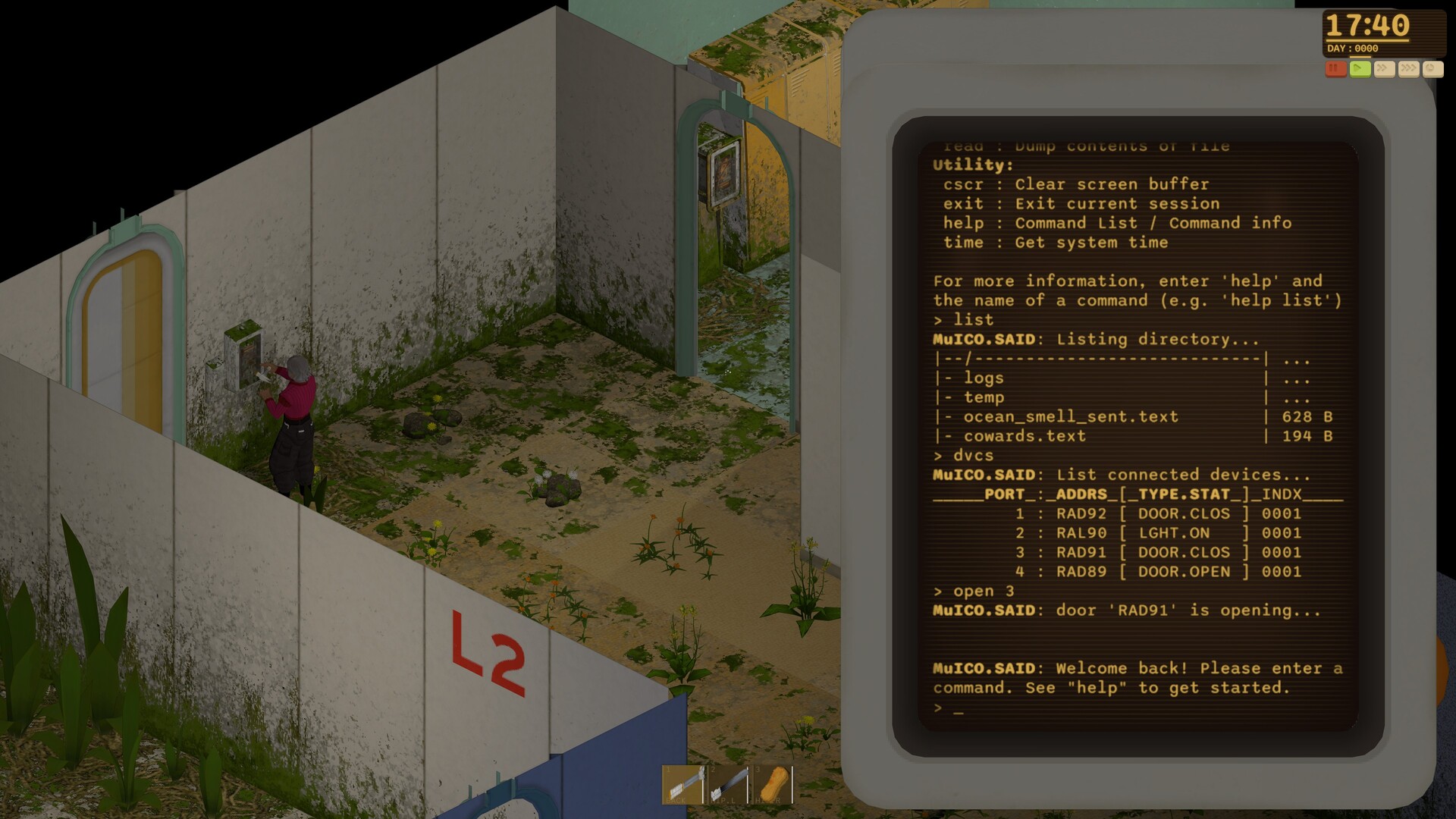
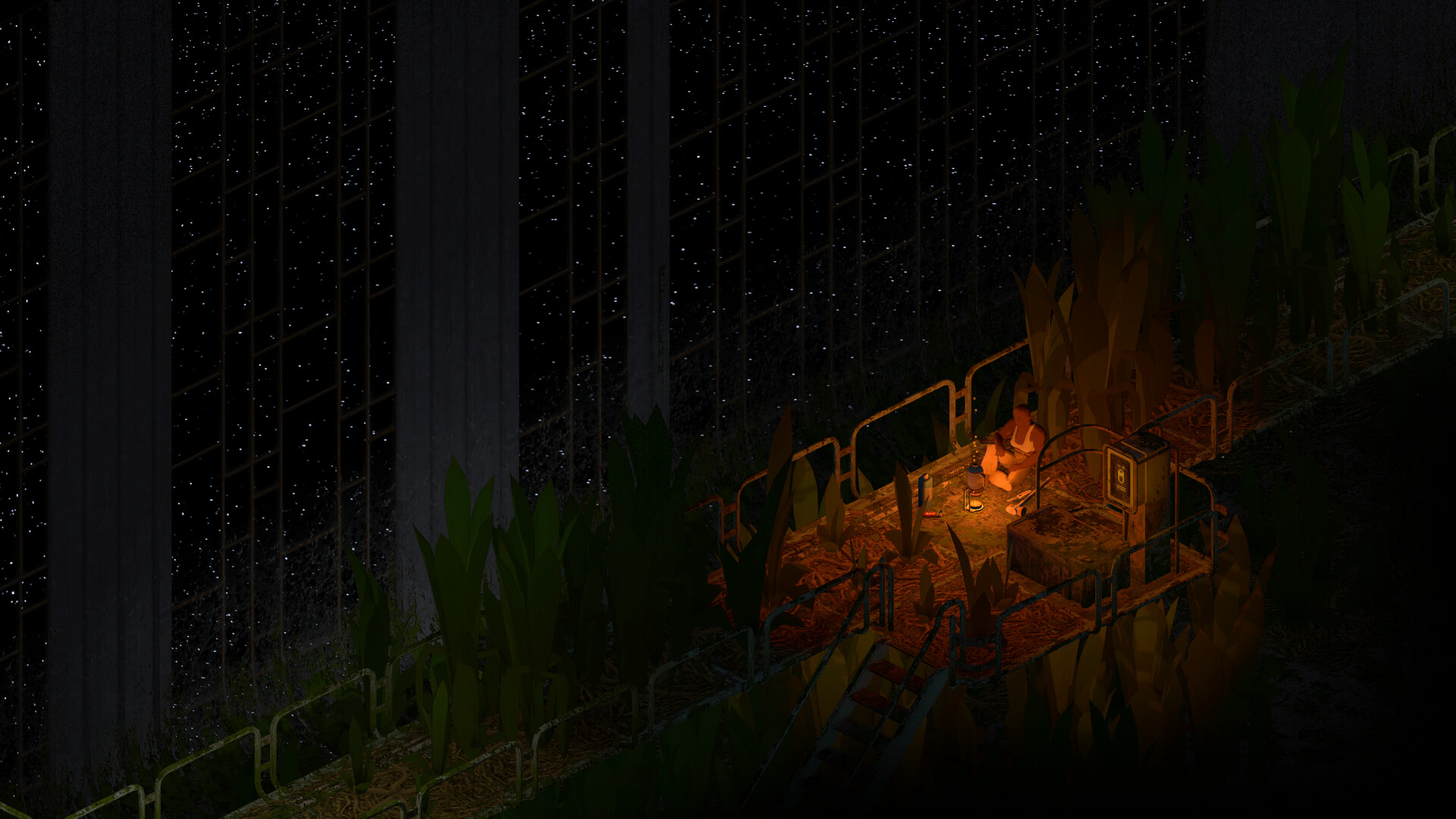
The generation-ship setting gives familiar survival verbs a coherent reason to exist. Scavenging is archaeological as well as practical; vegetation can be both resource and threat; and every repaired refuge sits inside a failed closed ecosystem. That may produce stronger environmental storytelling than a generic wilderness map.
The mechanism here is worth spelling out. In a conventional survival game, the map is usually an indifferent wilderness: trees are wood, rocks are stone, and the fiction is thin. In Dandelion Void, the map is a machine that failed. The jungle is not background; it is the consequence of a closed system breaking down. That reframes every resource. Salvaging a component is not just gathering crafting material—it is reading the history of the arkship and deciding which parts of the inherited disaster to reuse. Vegetation that can be harvested and vegetation that can kill you come from the same overgrowth, which forces the player to treat the environment as an ecology rather than a loot table. And a refuge built inside that ecology is a statement about how the player intends to survive, not just a place to store items.
That structure could produce stronger environmental storytelling than a generic wilderness map, because the lore and the systems point in the same direction. The risk is the opposite: if the ecology is only skin-deep, the setting becomes a visual hook with survival verbs bolted on. The demo is the place to test which way it leans.
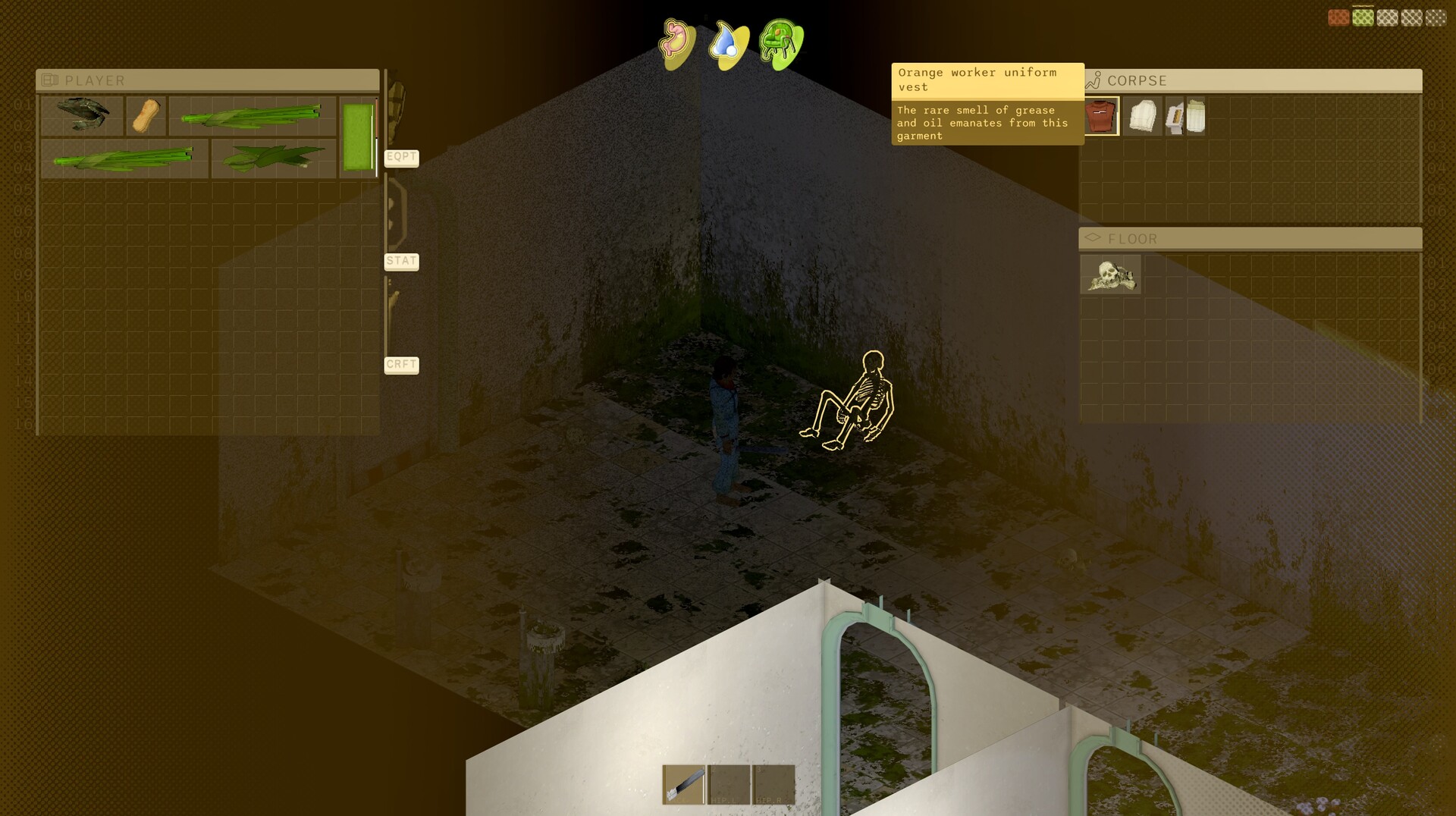
The game will need disciplined system design. Hunger, fatigue, crafting, shelter, combat, and exploration can reinforce one another, but too many meters can obscure the central fantasy. The best version makes each expedition a decision about distance, load, risk, and what knowledge to bring home. That is the counter-evidence to watch for: a demo that communicates atmosphere beautifully but buries the player in maintenance meters has not yet solved the design problem. The promise of the arkship is that every system has a reason to exist within the fiction; the test is whether the play experience makes those reasons legible without a wiki.
Why players should stay cautious
Early survival demos often communicate atmosphere better than long-term progression. The unknowns include map scale, enemy variety, automation, late-game goals, save stability, controller support, and the cadence of Early Access updates. Publisher backing improves discoverability but does not resolve those design risks.
Each of those unknowns is a specific question a player can ask of the demo. Map scale determines whether exploration stays interesting or becomes a commute. Enemy variety determines whether combat is a system or a speed bump. Automation and late-game goals determine whether the refuge becomes a genuine strategic layer or a one-time build. Save stability and controller support are practical concerns that a short demo may not surface. And the cadence of Early Access updates is unknowable from a demo alone; it depends on the studio's capacity and the publisher's expectations.
The current evidence supports visibility, not breakout momentum. A showcase trailer and public demo are meaningful signals; they are not substitutes for review growth, retention, or a transparent roadmap. Those indicators should be revisited closer to the 2027 launch. This is the honest framing: the game has earned attention, not a verdict. The distinction matters because showcase appearances can create the impression of momentum without the underlying data to back it. Wishlist totals, demo downloads, and concurrent players were not disclosed at the check time, so none are inferred here. What is verifiable is the existence of the demo, the store data, and the official description—and those are enough to justify a look, not a conclusion.
Who should play now
Players interested in systemic survival, base building, and science-fiction ecology should try the demo and judge three things: whether navigation remains readable, whether resource pressure creates interesting routes, and whether the refuge changes how later expeditions are planned. Those three tests map directly onto the game's pitch. Readable navigation is the difference between exploration and frustration. Resource pressure that creates routes is the difference between survival and busywork. A refuge that changes later planning is the difference between a base and a backdrop. If the demo passes all three, the 2027 Early Access plan becomes something to anticipate rather than merely monitor.
Wait if you require Korean localization, verified Steam Deck support, cooperative play, or a fixed release date. None was confirmed in the checked app data. Waiting is not a judgment on the game; it is a recognition that the current information set does not answer those specific needs, and that the demo is a snapshot rather than a commitment.
Editorial verdict
Dandelion Void earns a watch-and-play-the-demo recommendation. The overgrown arkship is more than a visual hook if its ecology, scavenging, and refuge systems genuinely interact. The demo is the correct place to test that claim; the 2027 Early Access plan is too distant for stronger conclusions.
What would change this verdict? Positive signals would include a demo that makes the three tests above legible without external documentation, a roadmap published before Early Access, and disclosed engagement metrics that show sustained interest rather than a showcase spike. Negative signals would include a demo that leans on atmosphere while hiding its systems, unresolved save or performance issues, and silence on the questions the store data leaves open. None of those signals are available yet, which is precisely why the recommendation is to play the demo and watch, rather than to commit.
Sources and image rights
- Official Steam store: https://store.steampowered.com/app/3582810/
- Official Steam app data: https://store.steampowered.com/api/appdetails?appids=3582810
- Official demo trailer: https://www.youtube.com/watch?v=zuWk6-aG3A8
- Triple-i demo announcement coverage: https://www.ign.com/videos/dandelion-void-official-demo-launch-trailer-triple-i-initiative-fall-showcase-2026
- Evidence checked October 13, 2026 at 1:58 p.m. MYT.
- Image rights: hero and screenshots are official Steam store assets supplied by Manzanita Interactive/Kwalee, downloaded locally for identification, reporting, and criticism; no compositing or semantic alteration. © respective rights holders.