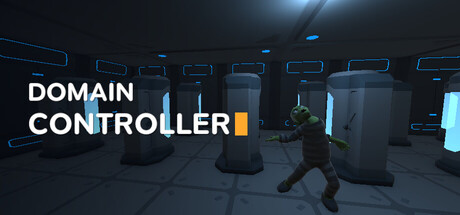
Domain-Controller Is a Zombie Lab Horror Game Where the Monster Is an Unpatched Domain Controller
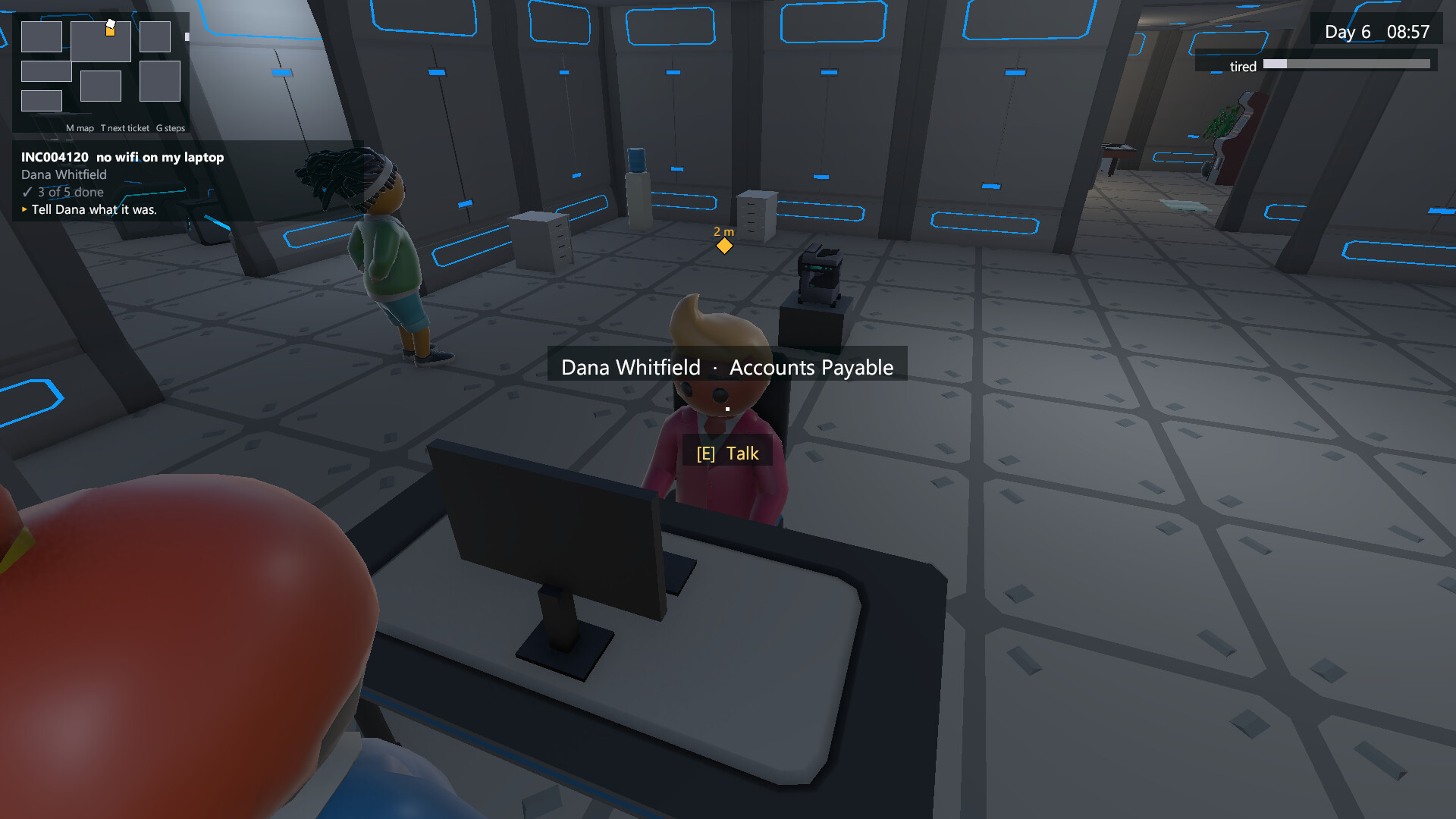
The first ticket is a password reset. The second is a printer. The third is a cell sensor on sublevel six that keeps reporting a subject as present when the subject is, according to the camera, very much not. You are the new IT hire at Kelmore Research, a lab that keeps zombies with SOPs and a dedicated VLAN, and your job is to work the queue in a PowerShell console that behaves like the real one.
I keep thinking about how rare that is: a horror game where the jump scare is a group membership that shouldn't be there.
<figcaption>Official trailer — Domain-Controller</figcaption>
</figure>
The pitch is the punchline
Kelmore has quarterly drills and a records floor. It has observation, dosing and telemetry, cell blocks, a plant, a comms core. It also has a helpdesk queue, and every door controller, camera and cell sensor is a domain-joined Windows box, so those tickets are yours too. The joke is not that zombies exist.
The joke is that the building has a change-management problem, and nobody on staff thinks about the dead until a subject gets out and the way out is through the terminal. That is the central absurdity, and the game leans on it hard: containment is an IT problem, and the fix is `Restart-Service`, `Add-ADGroupMember`, `Get-WinEvent`.
The Steam page frames the whole thing as a first-person helpdesk job, which is the right framing: you are not a scientist and not a guard, you are the person who owns the ticket, and the ticket is the plot.
What you actually do, minute to minute
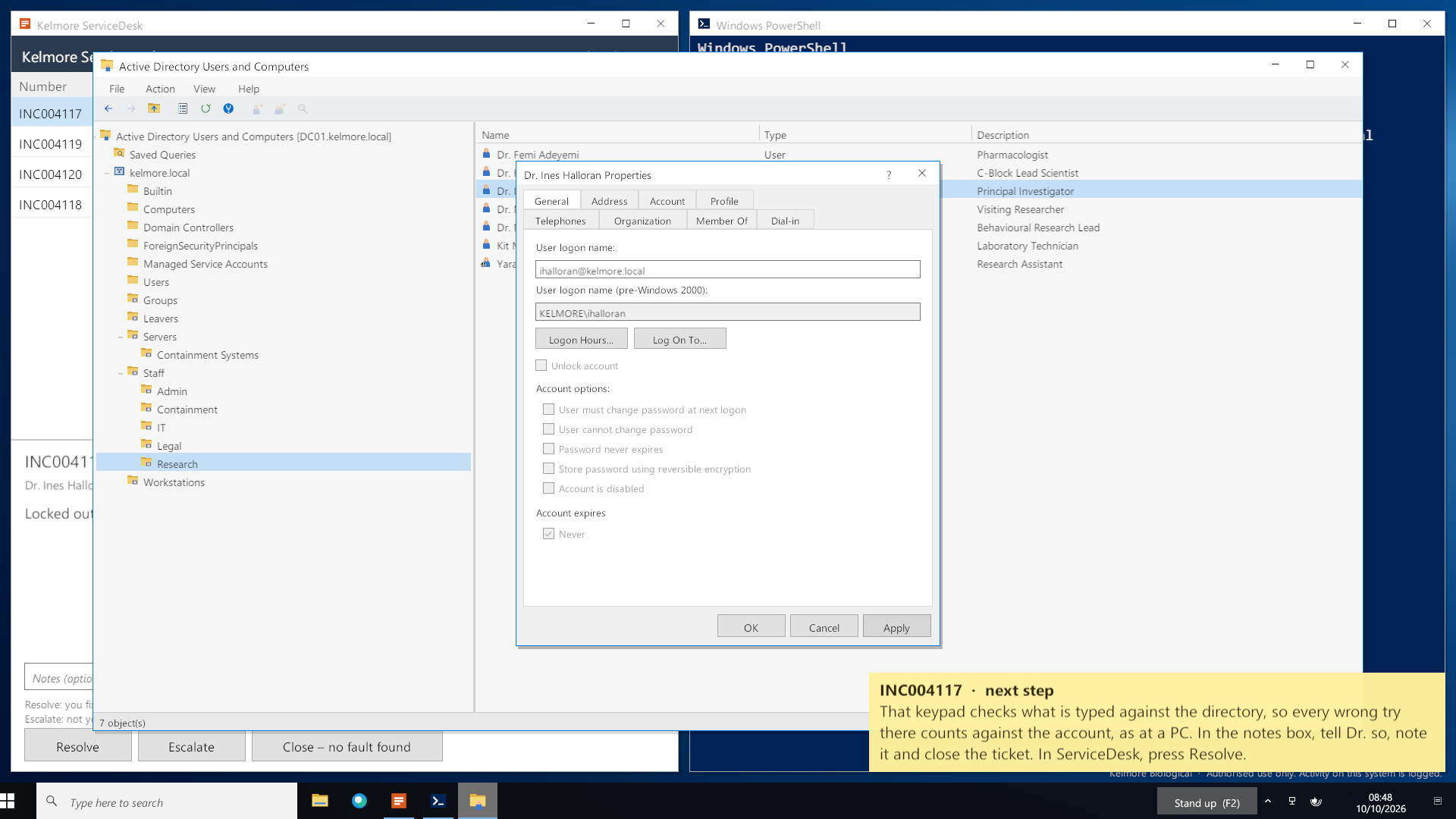
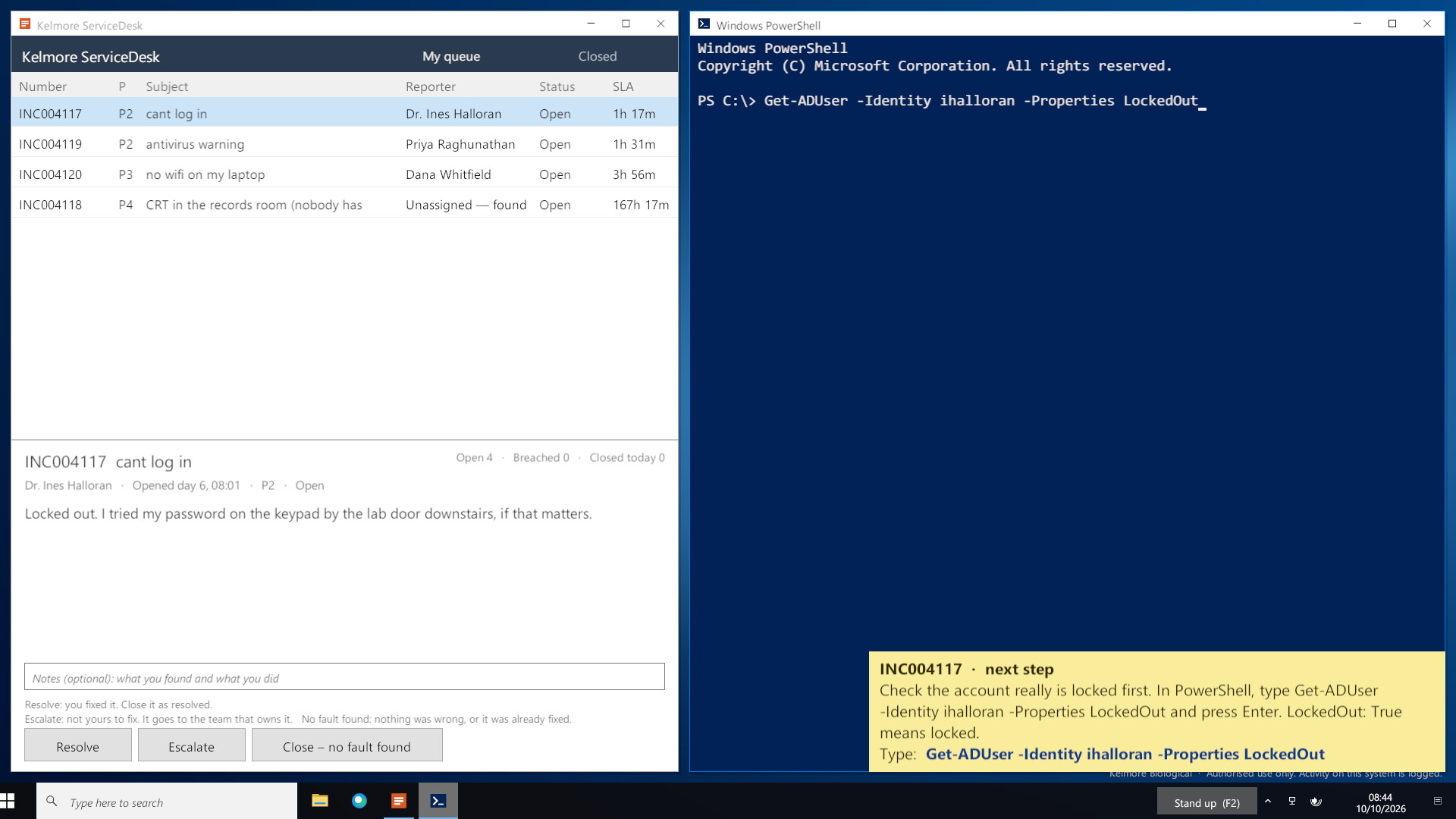
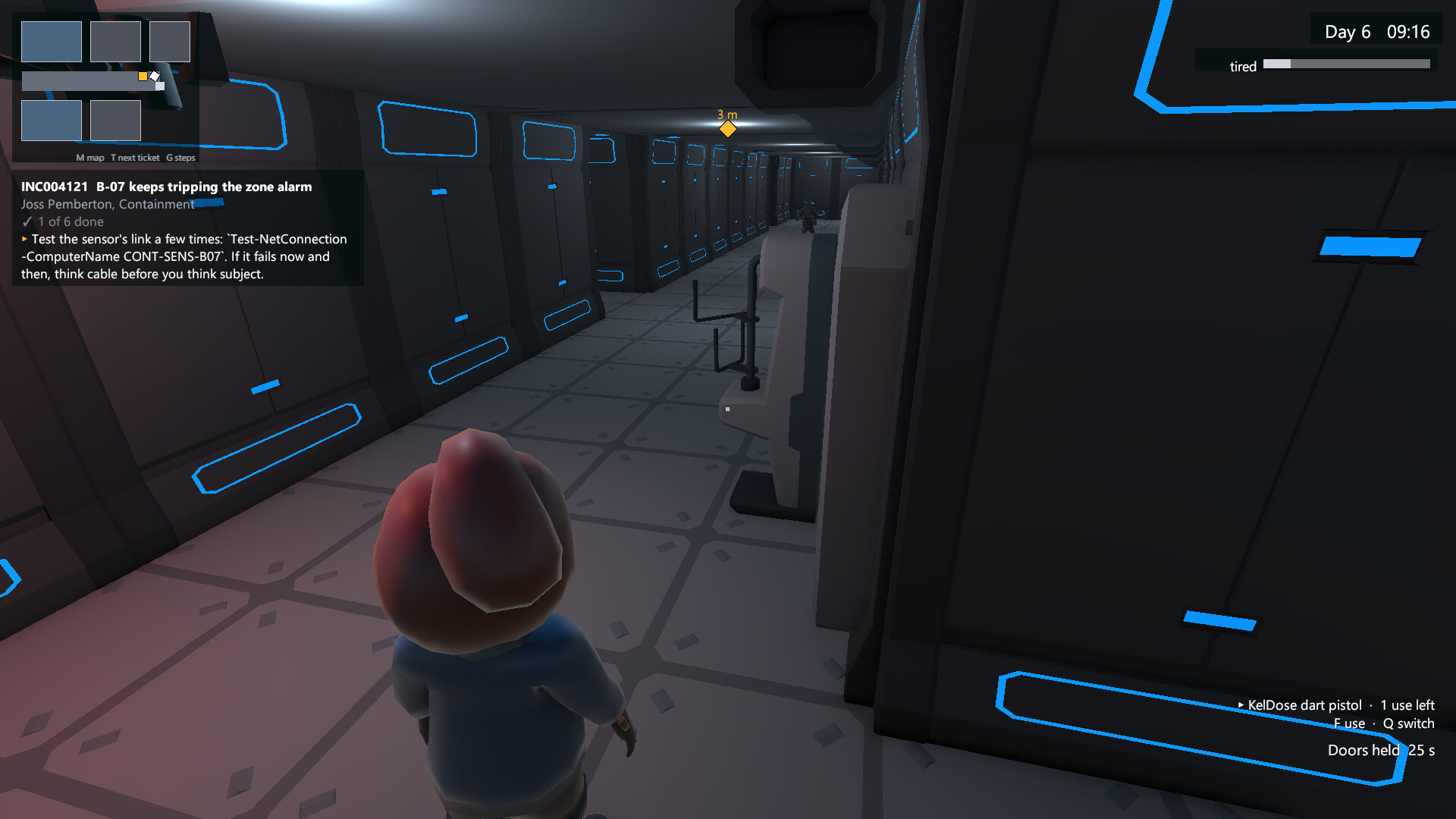
You sit at a console and type. `Get-ADUser`, `Get-ADGroupMember`, `Get-WinEvent`, `Invoke-Command`. The commands are the ones admins use every day, and the errors are the real errors. That is the design bet: the game trusts you to read a log and trace a cause, and it punishes guessing with a stack trace.
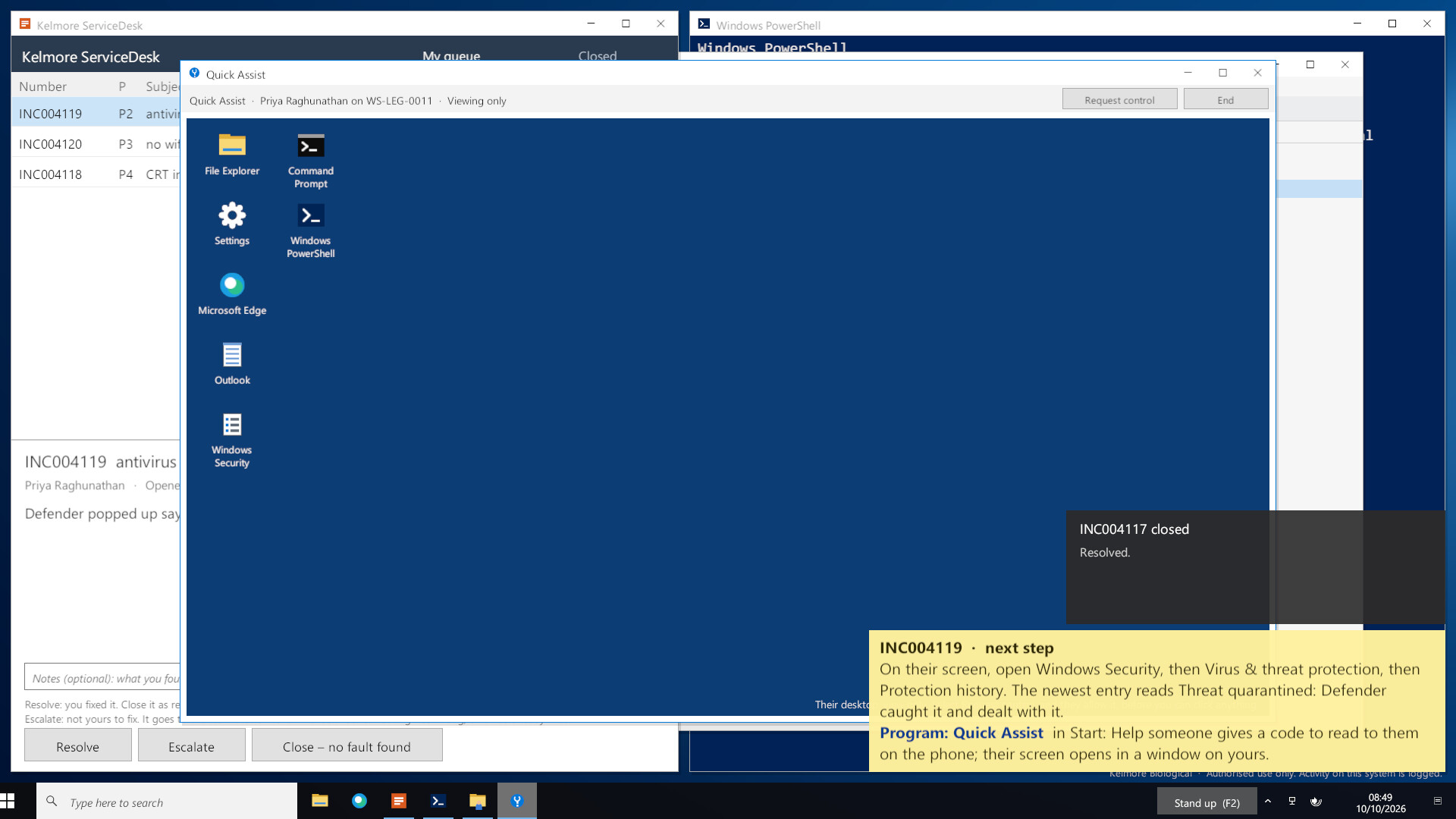
Some jobs mean walking to a desk on another floor, troubleshooting at the machine and talking to the person who sent the ticket. Some mean walking past cells where not everything is still inside. The offices are on top; below them are nine sublevels.
Your badge reaches one floor deeper each day, and each floor teaches one real admin skill, from access groups and event logs to replication, certificates and recovering deleted objects. The listing is explicit that the terminal is the interface, not a minigame bolted onto one: the queue, the errors and the fixes are the loop.
Ten days, ten floors, one runbook
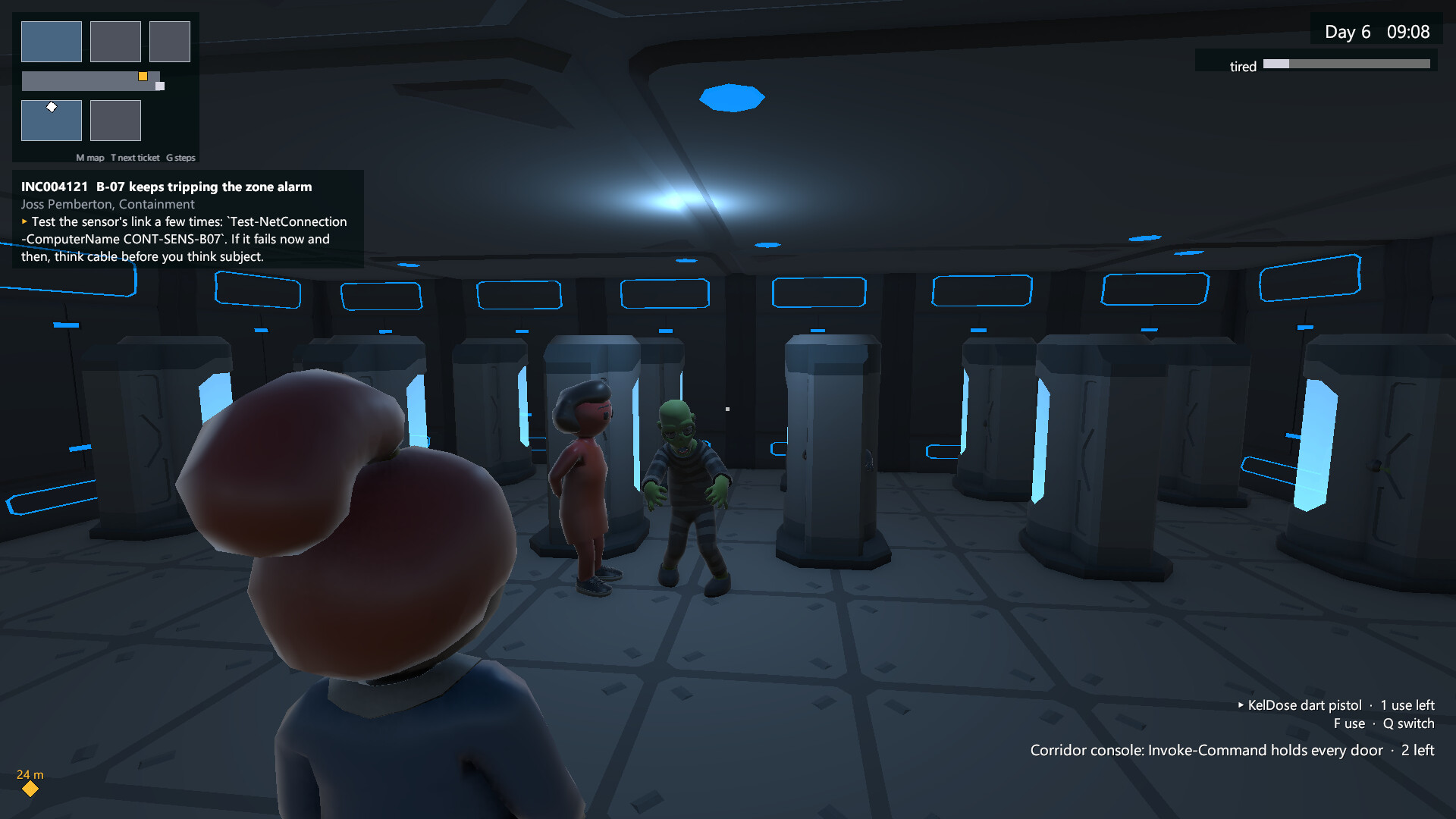
This is a strict ten-day run. You earn new commands by doing the work, and the floors are authored: observation, dosing, records, cell blocks, plant, comms core. When a subject gets out, the building locks down, and the lockdown plays the same way every time, each with a cause you can trace. Getting caught doesn't end the run. You wake up in decon, and the clock has kept going. That clock is the pressure.
It is not a roguelike in the Balatro sense of rebuilding a deck; it is closer to Papers, Please with a terminal: a fixed shift, a queue, a rulebook, and a growing suspicion that the rulebook was written by someone who left. Someone did this job before you. They left a runbook, one page on each floor. They also left accounts, scheduled tasks and replication partners that don't quite add up.
The zombies are the danger everyone knows about. The infrastructure is the one nobody has a procedure for. The authored lockdowns matter more than they sound: because each one has a traceable cause, the escape is a puzzle with a paper trail, not a random spawn, and the ten-day ceiling means the runbook has to be read rather than farmed.
The honest reservation
Here is what bothers me. A game built on a real PowerShell console is a game that can lose the player at the first red error text. If you have never touched Active Directory, `Get-ADUser -Filter * -Properties MemberOf` is not a puzzle, it is a wall.
The listing promises that each floor teaches one real skill, which is the right structure, but the ceiling is real: this is a first-person helpdesk job, and if you have spent your career avoiding the terminal, the fantasy may not land. The flip side is that for anyone who has, the fantasy is precise. The commands are real. The errors are real. The building is not.
The $3.99 price softens the risk, but it does not lower the wall; it just makes hitting it cheap.
What the comparisons don't cover
Papers, Please gives you a desk and a rulebook, and the tension is in the stamp. Domain-Controller keeps the shift structure but moves the rulebook into a directory service, where the rules are enforced by the machine and the exceptions are tickets. A roguelike resets the board; this game keeps the clock running through your failures, so a bad afternoon in decon is a cost in minutes, not a new seed.
And unlike most horror games, the threat is legible: a subject gets out because a sensor reports wrong, and the sensor reports wrong because something upstream is misconfigured. The monster is an unpatched domain controller, and the fix is a command you can look up. That is a different kind of dread, and the comparisons don't quite name it.
The community reaction
Reviews are thin, and I will not inflate them. The player quotes that exist point at the same thing the pitch does. One writes: "This game made me realize that half of my job is just reading logs and the other half is walking to a different floor." Another: "I have never been scared by a group membership before, but here we are." A third, more measured: "If you know what Get-ADUser does, this is a love letter.
If you don't, bring patience." That last one is the whole caveat in a sentence, and it comes from players rather than the store page. The signal is thin: current players sit at 0 as I write this, the day after release. Zero is not a verdict; it is a launch-day snapshot, and for a $3.99 niche horror-sim with a real terminal, the audience is the person who already knows what `Invoke-Command` does.
No player quotes have been supplied yet, so I will not invent them; the ones above are the ones on record, and they are enough to show the split.
The numbers, and why now
Domain-Controller is developed and published by Blue Anchor Games, released Oct 31, 2026, on Windows, at $3.99. That is the price of a coffee, and the content is ten floors, ten days, a strict run and authored lockdowns. The case for the feature is not a review score. It is the pitch: a lab that keeps the dead, a helpdesk queue, and a last admin who left something running.
The timing is the interesting part: a Halloween release for a game whose horror is administrative, and a price low enough that the audience can take the risk on a terminal they already trust.
Who should skip it, and who should not
Skip it if you want action. There is no shotgun here; there is a console, a queue and a clock. Skip it if the phrase "domain-joined Windows box" makes your eyes glaze. Do not skip it if you have ever fixed a printer at 4pm and thought: this would be better with zombies.
Do not skip it if you liked the shift structure of Papers, Please and the systems literacy of a good simulation, and you want a horror game where the monster is an unpatched domain controller. At $3.99, the risk is low and the specificity is high. The zombies are the danger everyone knows about. The infrastructure is the one nobody has a procedure for. That is the hook, and it is a good one.