TRACE IT Store Check: A $3.99 Puzzle That Proves Its Answer Exists
This is a store-data check of TRACE IT, not a hands-on review — every claim below comes from the official Steam listing (AppID 5398650), verified today, and nothing here reflects play time.
The pitch
<figcaption>Main Trailer — TRACE IT, HuntForge. Source: Steam AppID 5398650 (checked 2026-10-25).</figcaption>
</figure>
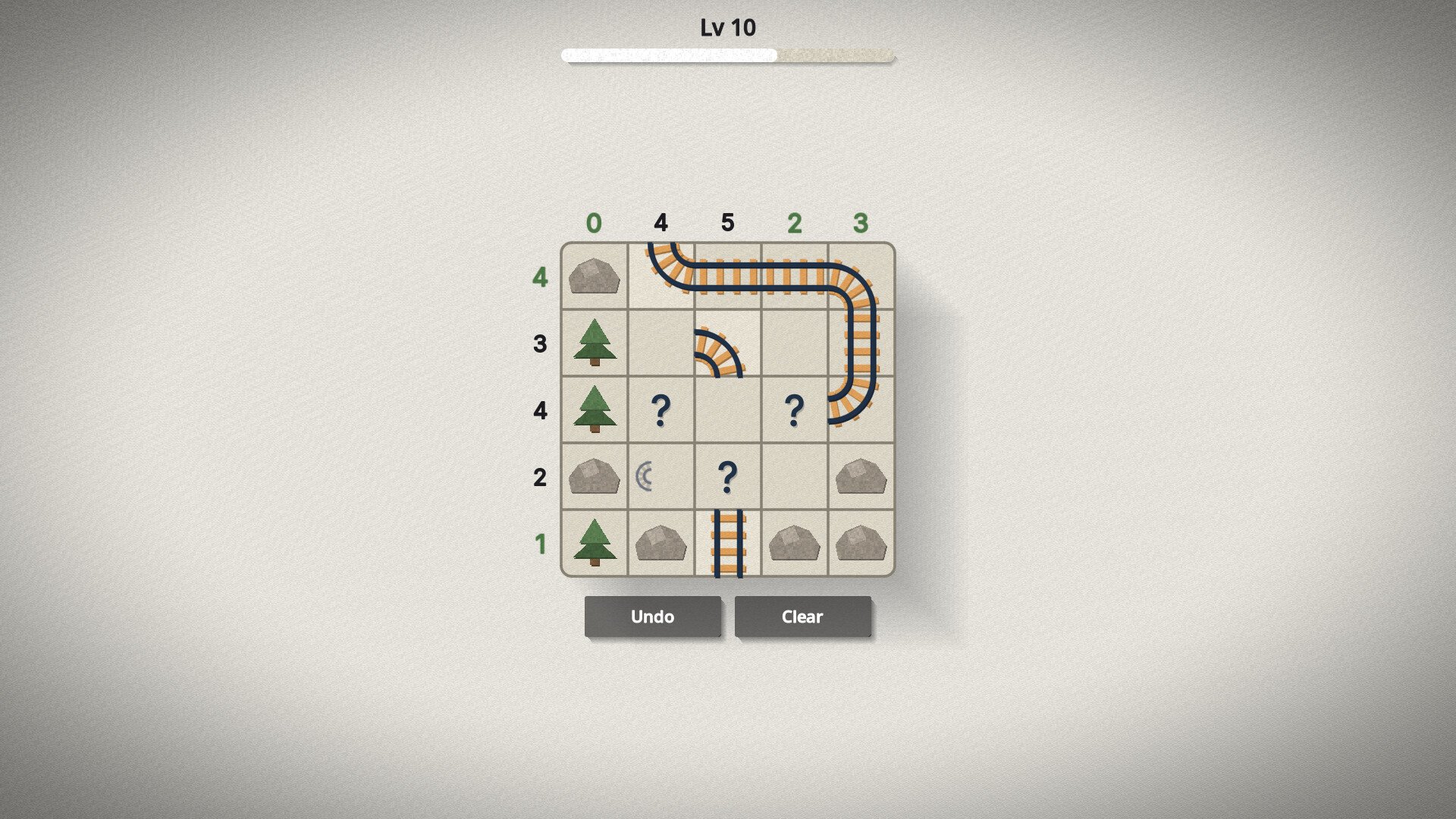
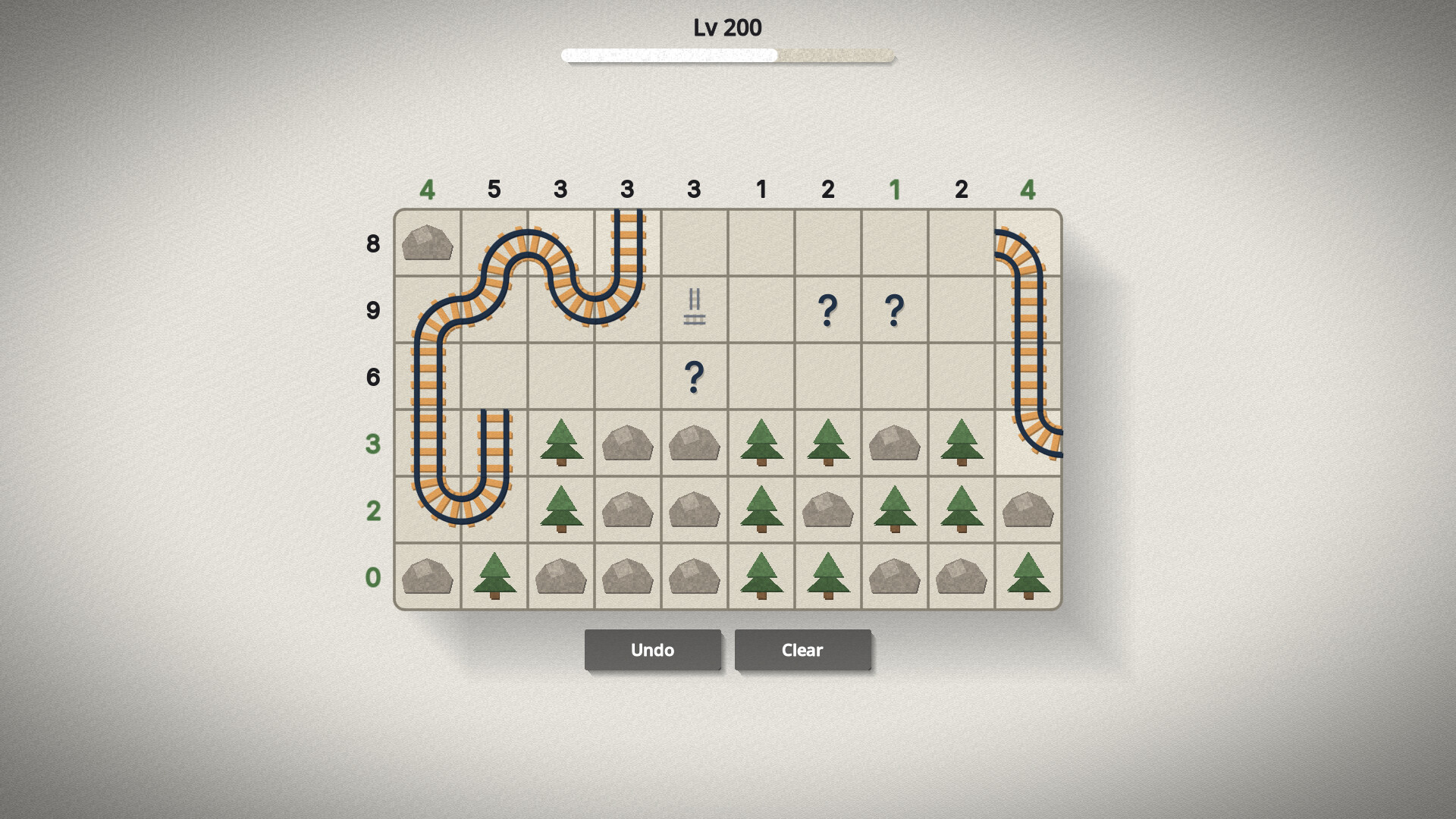
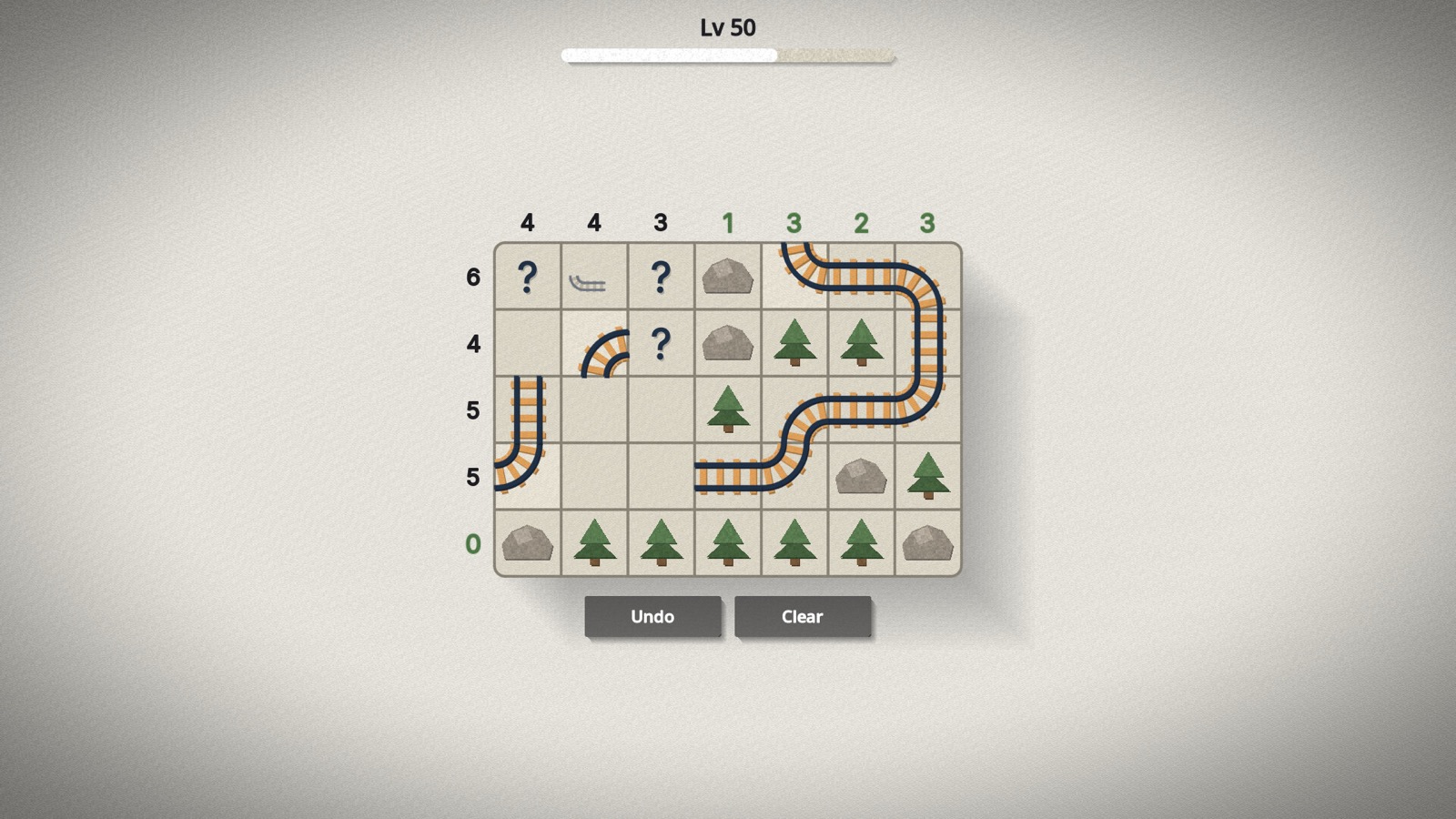
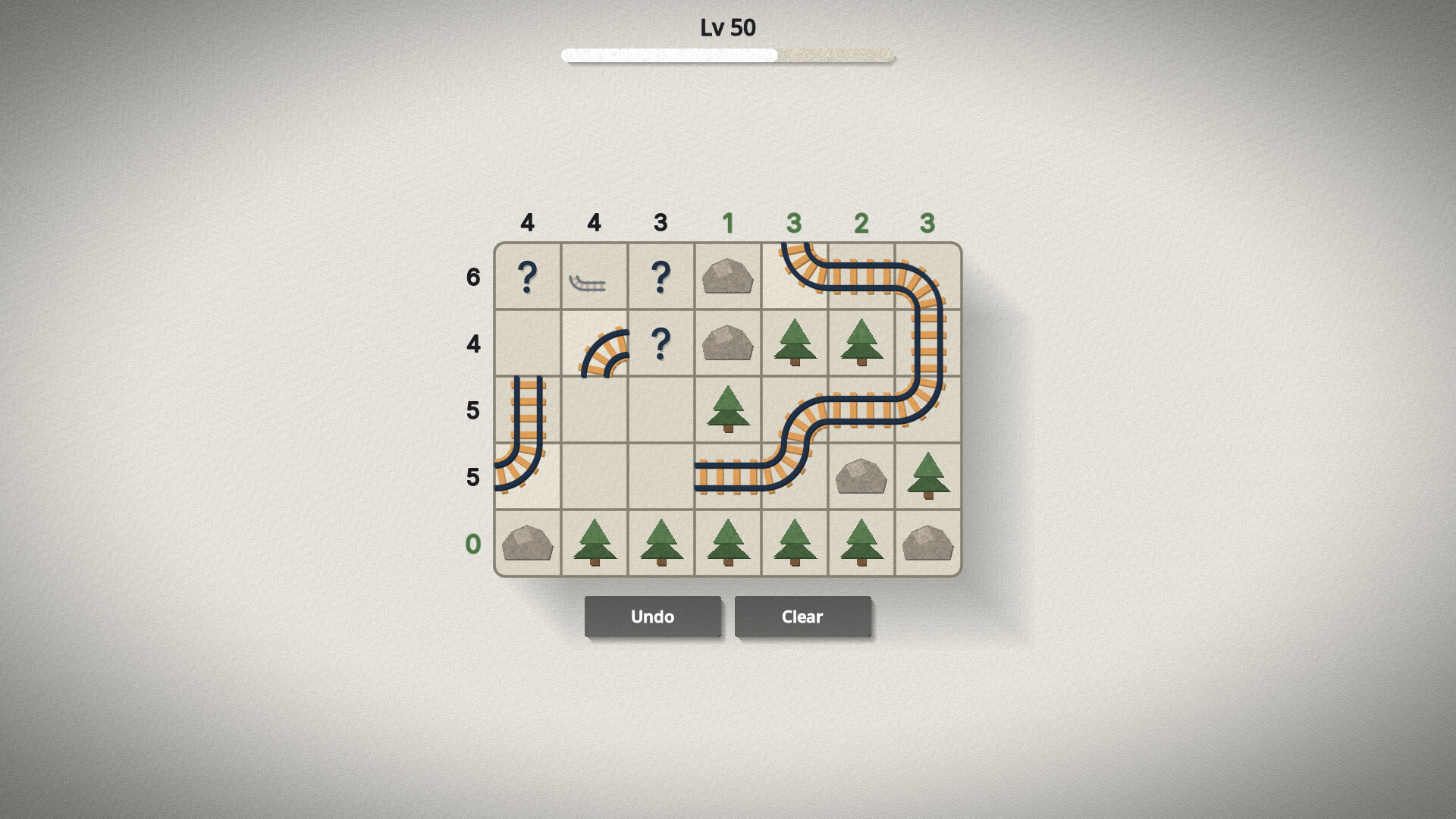
The listing describes a paper railway puzzle: every row and every column carries a number telling you how many of its cells hold track. Start at an entrance on the board edge, join straight and curved pieces into one continuous railway with no branches and no loops, and run it to the exit.
That is a Nurikabe-adjacent constraint puzzle wearing a hand-drawn paper aesthetic. The rules are stated precisely enough to reconstruct without playing, which is unusual and useful — many puzzle listings describe mood instead of mechanics.
It is worth pausing on how much the rule set gives away, because it tells you what kind of game this is. Row and column counts are a global constraint: every placement you make is checked against numbers that span the whole board, so a wrong piece does not merely look wrong locally, it makes some distant count impossible to satisfy. That is the mechanism behind deduction puzzles of this family — the difficulty is not in spotting pieces but in holding several simultaneous constraints in your head and working out which one is about to break. The no-branches and no-loops rules add a second layer, because a railway that is a single path from entrance to exit is a connectivity constraint, and connectivity constraints interact with the counts in ways that can invalidate an otherwise plausible-looking partial line. None of this is stated on the page as a design philosophy; it is simply what the rules imply, and it is the reason a puzzle of this type can be verified at all.
The claim worth checking
One sentence on the page does most of the work: every level is computer-verified to have a single unique solution, so numbers and logic are all you need, never guesswork.
This is the strongest promise a logic puzzle can make, and it is falsifiable. A puzzle that requires guessing is a bad puzzle, and a store page that promises no guessing is claiming a verification pass over its entire level set. It also means the difficulty has to come from deduction depth rather than from ambiguity, which is a much harder design problem than generating grids.
To see why, consider what a solver does when it is unsure. A human stuck on a board has two options: reason further, or try a piece and see. The second option is guessing, and it is corrosive — once you allow it, you stop trusting your own deductions, and the puzzle becomes a search problem rather than a logic problem. A unique-solution guarantee is a promise that the first option always suffices, that there is always a next forced move somewhere on the board. That is a property a computer can check exhaustively, and it is the kind of property that is cheap to state and expensive to deliver.
The page pairs that with a deliberate pace: a warm hand-drawn look, a gentle soundtrack, pour a cup of tea, lay the line at your own pace. The product is explicitly not timed.
That combination is not incidental. An untimed puzzle with a verified solution is a specific promise about failure: you cannot lose, you can only be stuck, and being stuck is temporary because the logic is guaranteed to resolve. Compare that to the timed puzzle tradition, where the clock supplies the difficulty and the board supplies the content. Here the board has to supply both, which puts the entire burden on the level design and makes the verification claim load-bearing rather than decorative.
Store facts, verified
- AppID 5398650, Windows only
- $3.99, no Mac or Linux build
- Released October 25, 2026 — the same day as this check
- Genres tagged Casual, Indie
- Developer and publisher both listed as HuntForge
- Five screenshots on the store page, one trailer
- No public demo listed
What the data cannot tell you
Five screenshots and one trailer is a thin media set for a puzzle game, because the thing that matters most is level count and difficulty curve. The listing does not state how many levels ship, and launch-day store data has no review sample yet.
Two unknowns decide whether $3.99 is fair. First, level count: a verified-unique-solution puzzle set is expensive to author, so a low count at this price is plausible. Second, whether the deduction ceiling rises. Constraint puzzles live or die on whether later boards force new reasoning or merely larger grids.
The distinction matters more than it sounds. A larger grid is not a harder puzzle; it is a longer one. If the only thing that changes between level one and level fifty is the board size, the player learns one technique and applies it more times, and the game runs out of ideas long before it runs out of levels. A real difficulty curve introduces new inference patterns — a count that only becomes useful once another region is settled, a curve that is forced by connectivity rather than by counting — and that is where the design work concentrates. The verification claim, if true, is evidence that the author took the hard path, because checking uniqueness is exactly the step you skip when you are shipping volume rather than craft.
There is also a counter-consideration worth stating plainly: a unique solution does not guarantee a satisfying solve. A board can have exactly one answer and still be tedious, if the forced moves are numerous but shallow, or if the path to the answer is a long grind of the same deduction repeated. Uniqueness rules out ambiguity; it does not rule out monotony. That is a gap the store page cannot close, and it is the main reason the first reviews will be more informative than any amount of listing copy.
The price question
$3.99 is the price of a coffee, and that framing is the honest one. This is not a game you buy instead of something else; it is a game you buy for a quiet evening.
The risk profile is correspondingly low and so is the upside. If the level set is small, the value collapses quickly. If the verification claim holds and the difficulty curve is real, this is one of the better value propositions in the casual puzzle tier.
What the reader should take from that asymmetry is simple: the downside is bounded at four dollars and the upside is bounded by how many evenings the level set can fill. For a puzzle player, the relevant question is not whether the game is good but whether it is long enough to matter, and that is precisely the fact the listing withholds. The price is low enough that the decision can be made on the aesthetic and the promise alone — but only if you accept that you are buying an unknown quantity of content.
Verdict
Buy if you like deduction puzzles and want something quiet. The unique-solution promise is the reason to trust it, and the paper aesthetic is the reason to want it. Wait a week if level count matters to you — the first reviews will settle it faster than the store page can.
https://store.steampowered.com/app/5398650/